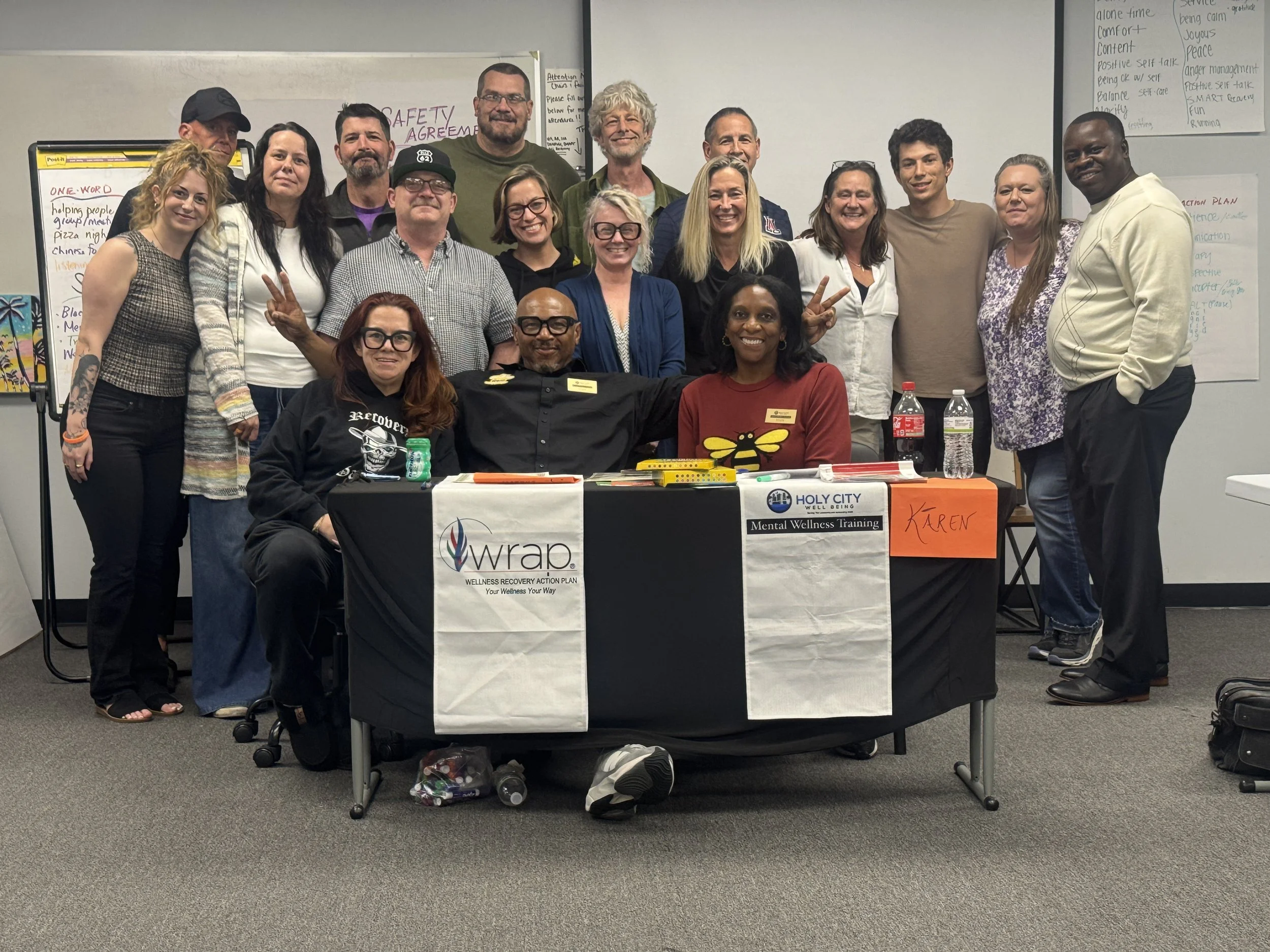
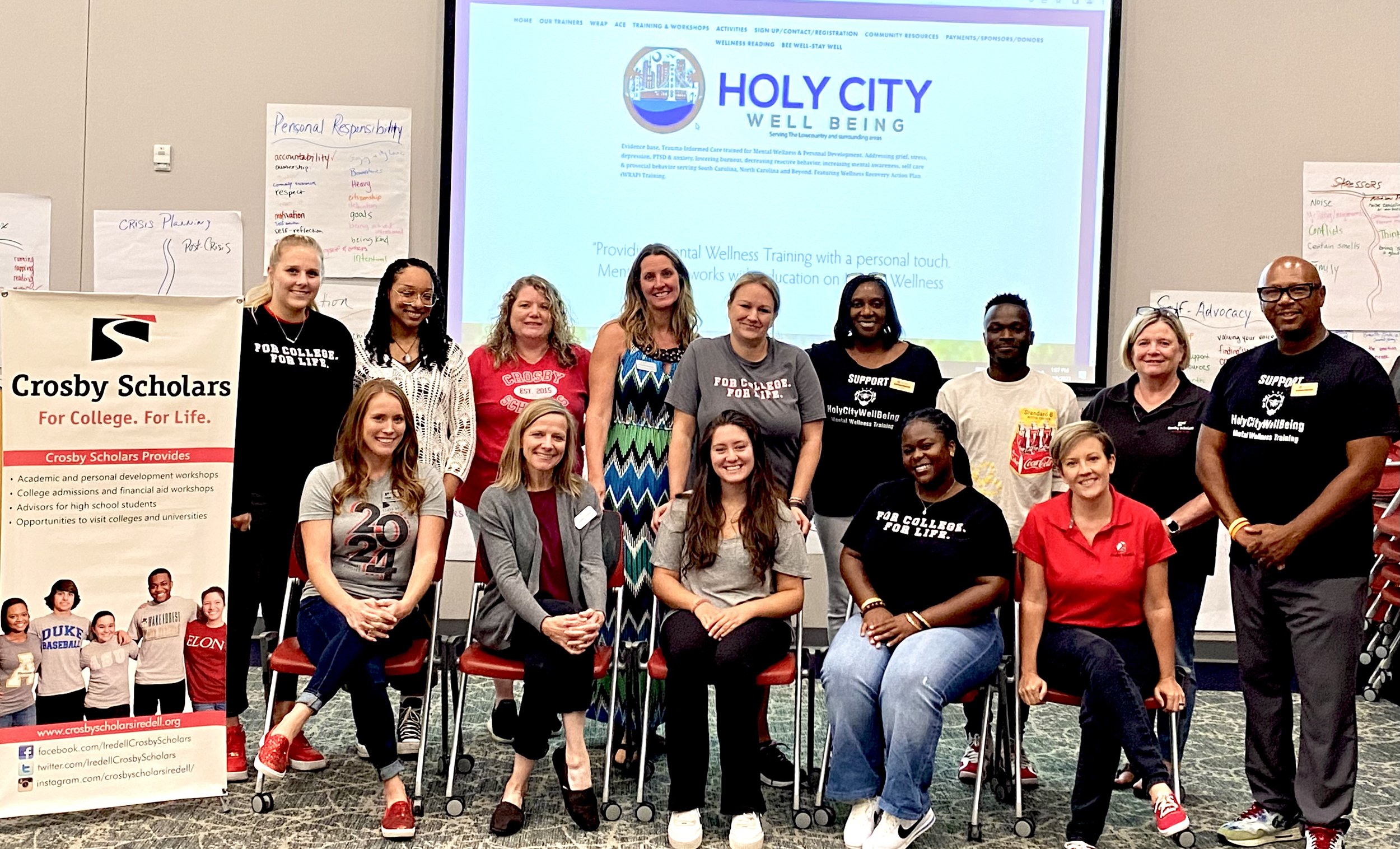
Holy City Well Being Mental Wellness Training Group (HCWB) is a nonprofit mental wellness training organization headquartered in Charleston, South Carolina, with an additional office in Winston-Salem, North Carolina. While rooted in the Carolinas, HCWB is a national organization that has provided training in more than 18 states, offering hope, direction, education, and development to individuals, organizations, and communities seeking to strengthen mental wellness.
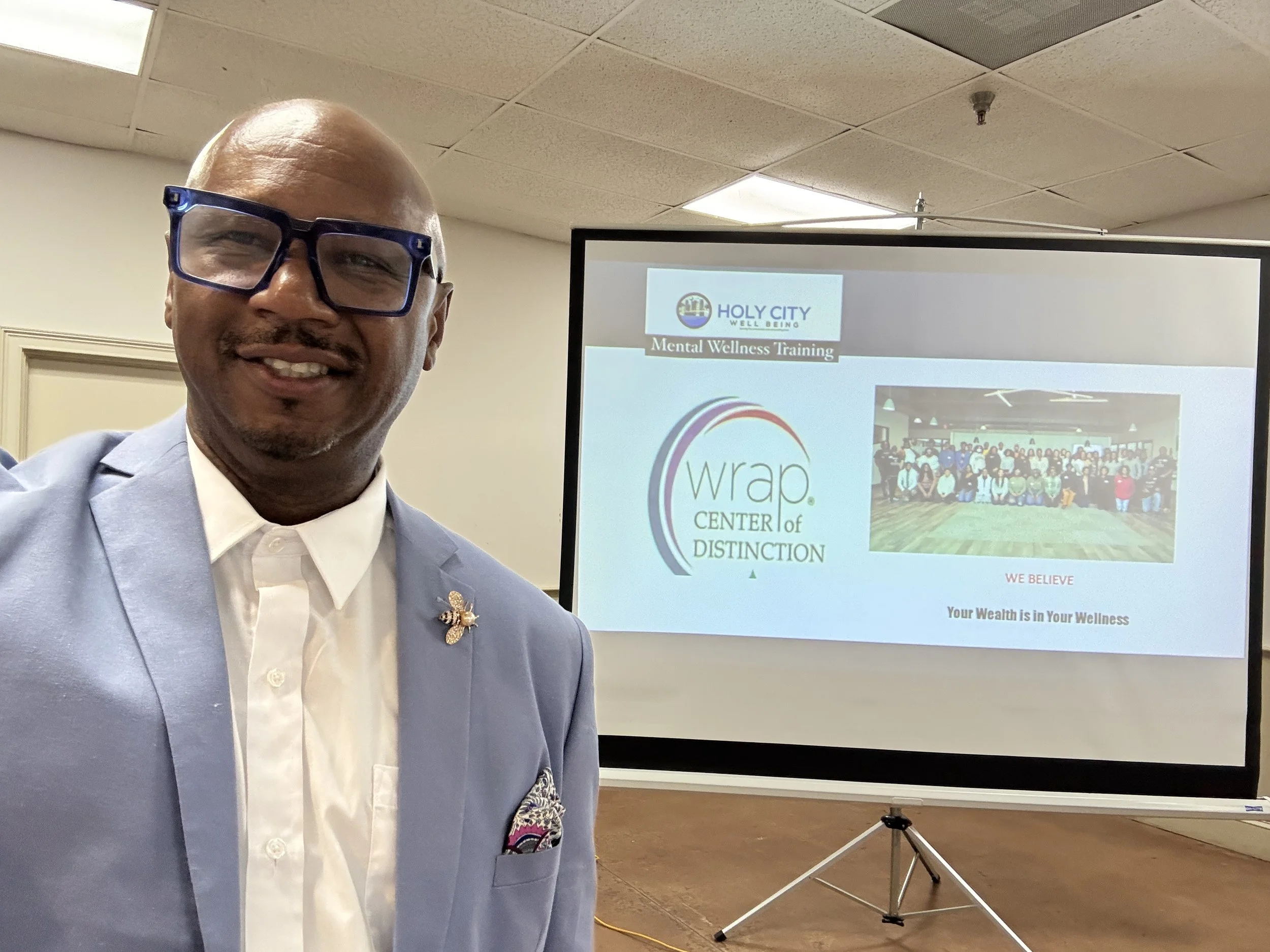
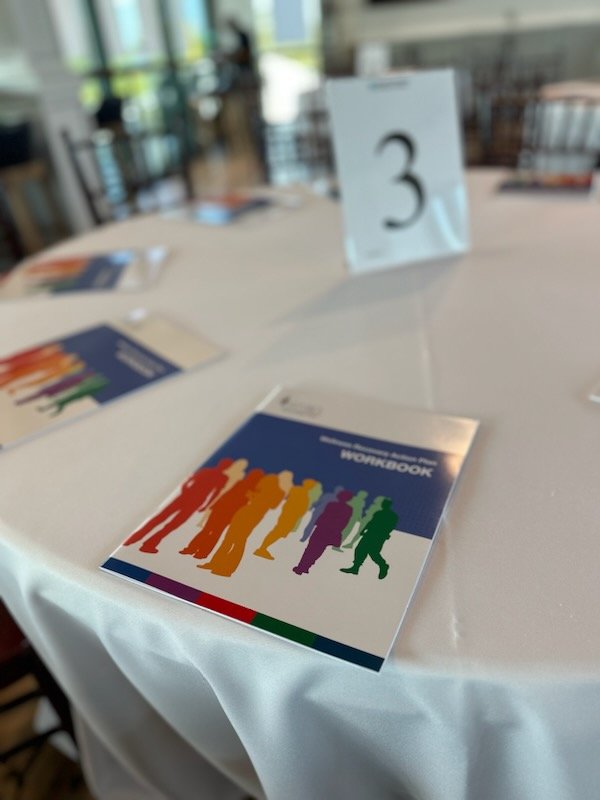
Recognized as a National WRAP® Center of Distinction through Advocates for Human Potential (AHP) and WRAP®, HCWB is committed to delivering high-quality, evidence-based mental wellness education rooted in the Wellness Recovery Action Plan (WRAP®) framework. This national distinction strengthens HCWB's role as a trusted training resource for advancing wellness education, recovery-focused practices, and practical strategies that can be applied in everyday life.
Our mission is to strengthen mental wellness by equipping both those who provide services and those who receive them with practical, evidence-based tools that promote wellness, resilience, self-advocacy, personal responsibility, and sustainable growth. We believe lasting outcomes require investing in the entire service relationship—the professionals and teams who pour into others every day, as well as the individuals, families, and communities receiving their support.
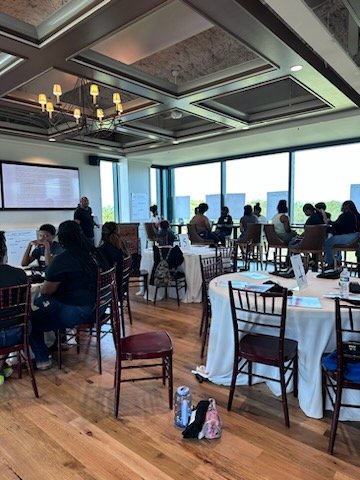
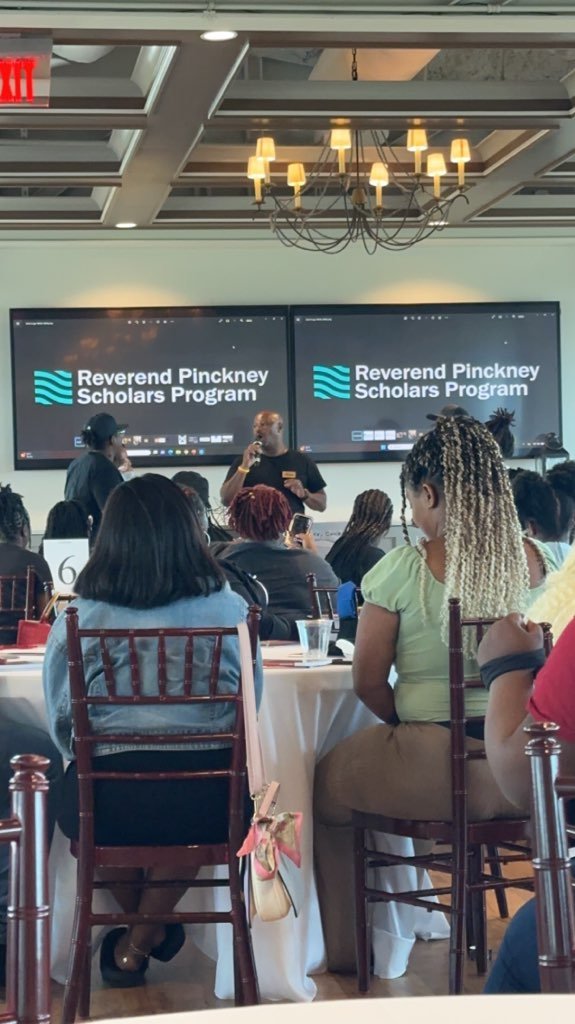
Through WRAP® training, engaging workshops, interactive activities, and HCWB-developed mental wellness programs, we address essential areas including stress management, grief, coping strategies, crisis recovery, self-care, emotional wellness, work-life management, and burnout prevention. Our trainings help participants increase awareness of personal stressors, strengthen communication and decision-making, identify support systems, develop personalized wellness tools and action plans, and build practical strategies for navigating challenges at work, at home, and in the community.
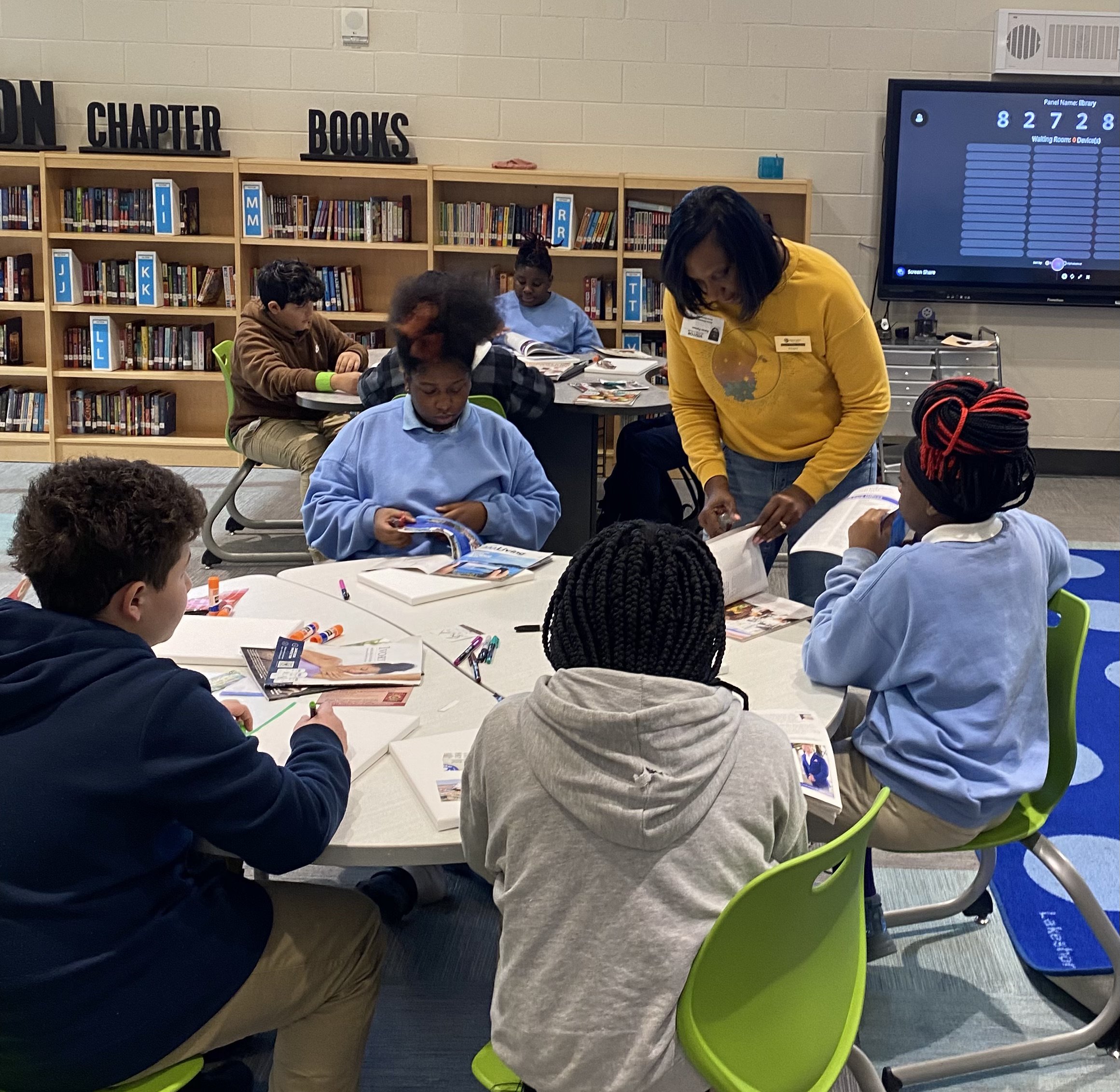
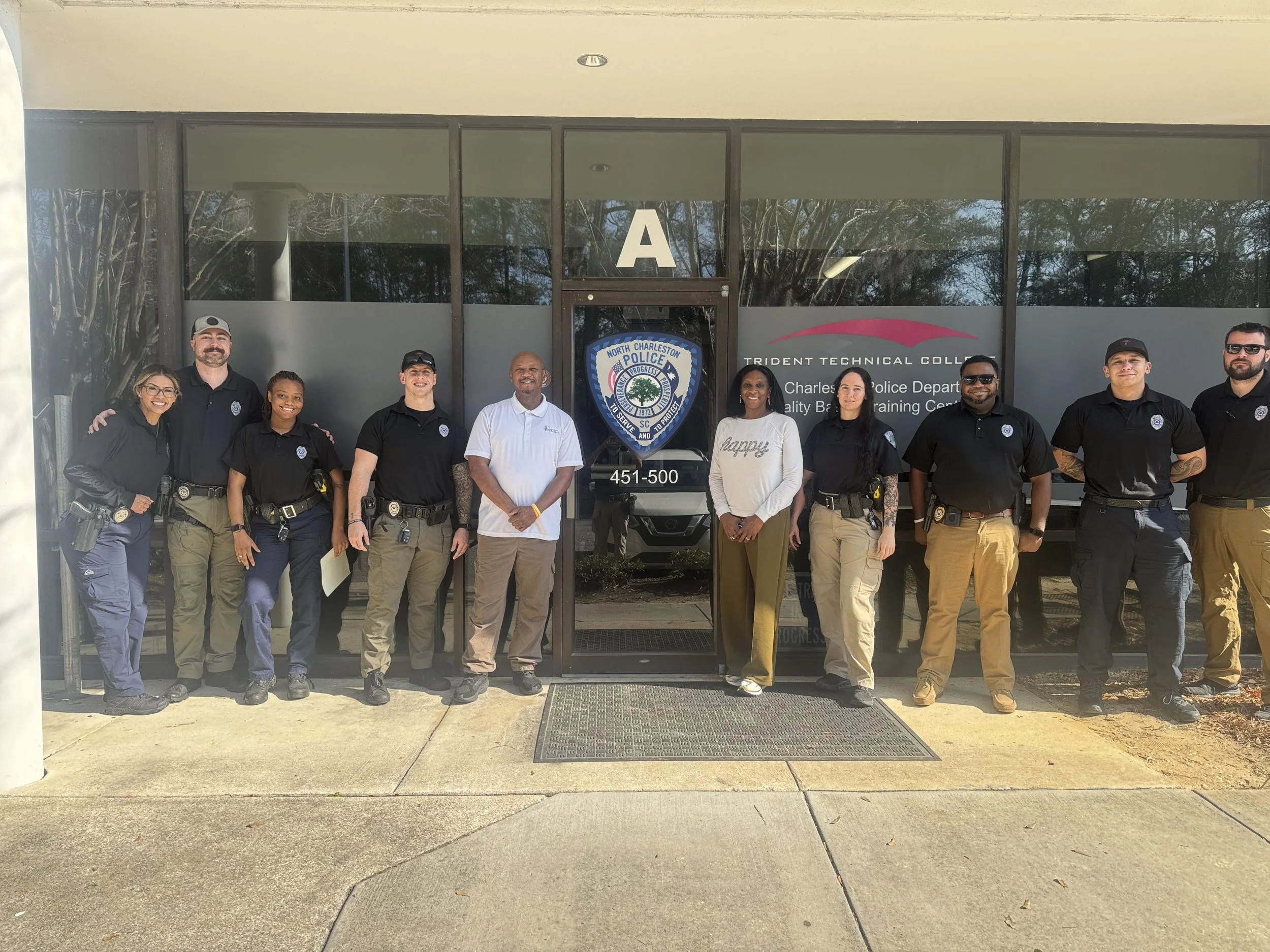
HCWB serves workforces, service professionals, nonprofit and community organizations, families, youth, young adults, and communities, creating opportunities for wellness education on both sides of the service relationship. By strengthening the wellness of those providing support while empowering those receiving services to actively participate in their own wellness, we seek to reinforce organizational efforts, improve sustainability, and contribute to stronger long-term outcomes.
Strengthen those who provide the service. Empower those who receive the service. Build healthier people, stronger organizations, and healthier communities.
Because healthier people create healthier organizations—and healthier organizations help create healthier communities.